Beyond the Biofilm: From Microbes to Environmental Impact
As part of #BiofilmWeek, our Beyond the Biofilm series is spotlighting exciting and diverse research from across our NBIC partner institutions. We hear from early career researchers, PhD students, and Interdisciplinary Research Fellows who are contributing fresh perspectives to biofilm and antimicrobial resistance (AMR) science. Their stories highlight not only innovation in research, but also the value of inclusion, collaboration, and diversity in driving scientific discovery.
In this blog, Hansani Wahalathanthrige, a PhD candidate at the University of Southampton, shares her journey into environmental microbiology and her research exploring how aggregating bacteria can help improve biofilm-based wastewater treatment. She reflects on her experiences as an international researcher, the mentors and opportunities that have shaped her career, and the importance of resilience, diversity and inclusion in science.
A journey shaped by curiosity and resilience
My journey into science started with my undergraduate degree in Microbiology at the University of Sri Jayewardenepura in Sri Lanka. I was always fascinated by the microbial world and how something invisible to the naked eye could have such a significant influence on our environment, health and everyday lives. As I progressed academically, I became particularly interested in environmental microbiology and the potential of microorganisms to address real-world environmental challenges.
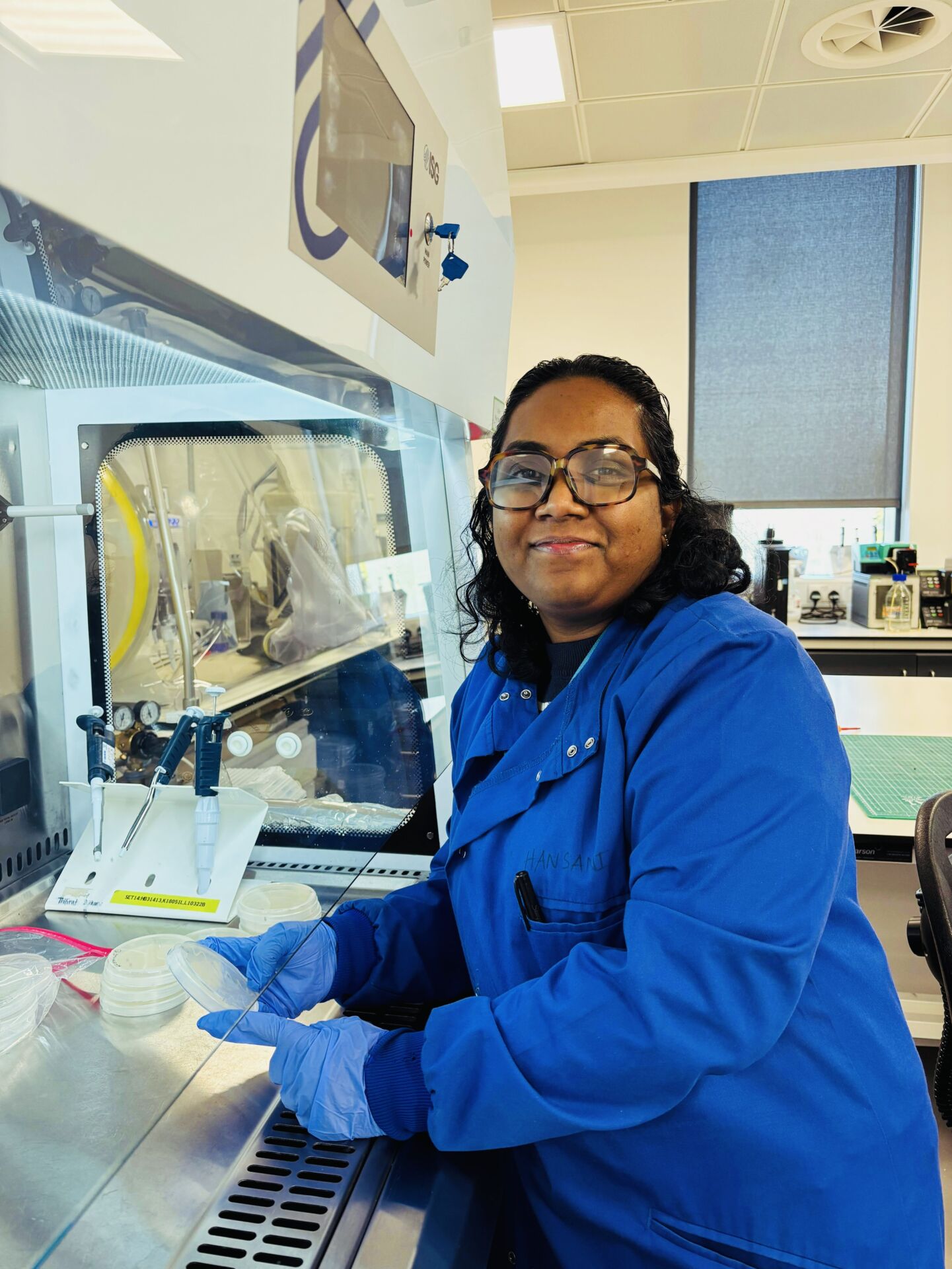
This interest led me to pursue a Master’s degree in Renewable Energy and Sustainable Technology at University of South Wales, where I further developed my interest in environmental sustainability. Eventually, I realised that I wanted to contribute to research that could translate scientific knowledge into practical environmental solutions. That motivation brought me to my PhD, where I now explore how we can better understand microbial communities to improve wastewater treatment.
Coming from Sri Lanka and building an academic career in the UK has shaped the way I approach opportunities and challenges. Moving into a different academic and cultural environment meant learning new systems, building professional networks and finding my place in an international research community. I think one of the most important things my background has taught me is resilience and adaptability. There have been moments when I have had to step outside my comfort zone, whether presenting my research internationally, networking with established researchers or contributing to scientific discussions. Presenting my research at international conferences, including the Asia-Pacific Biofilms Conference in Melbourne, Australia, was particularly meaningful. It reminded me that science is a global language and that your background should never define the boundaries of what you can achieve.
Harnessing microbial communities for cleaner water
My PhD research focuses on developing bioaugmentation strategies using aggregating bacteria in aerobic granular sludge (AGS) systems for wastewater treatment. Aerobic granular sludge is an advanced biological wastewater treatment technology in which microorganisms naturally organise themselves into compact, dense microbial aggregates called granules. These granules can provide several treatment advantages, including improved biomass retention and the potential for simultaneous removal of organic matter and nutrients. However, introducing specific pollutant-degrading microorganisms into wastewater treatment systems and ensuring that they remain there and perform effectively can be challenging. My research investigates whether naturally aggregating bacteria can act as biological bridges, helping functional microorganisms attach to and become immobilised within microbial aggregates. Ultimately, I want to understand the microbial mechanisms behind aggregation and use that knowledge to develop more effective and reliable bioaugmentation approaches.
Biofilms are central to my research. Aerobic granular sludge can be considered a highly structured form of immobilised microbial biofilm, where microorganisms are embedded within an extracellular polymeric substance matrix. This matrix provides structural stability and influences microbial attachment, communication, interactions and spatial organisation. My research specifically investigates how aggregating bacteria contribute to the development of these microbial structures and how their properties could be exploited to immobilise other beneficial microorganisms.
One of the main challenges in biological wastewater treatment is maintaining sufficient populations of functional microorganisms to achieve consistent pollutant removal. Conventional bioaugmentation approaches can be limited because introduced microorganisms may struggle to establish themselves within existing microbial communities or may be washed out of the treatment system. I hope my research will contribute towards overcoming this limitation by developing strategies that improve microbial retention through aggregation-assisted immobilisation. In the longer term, this could support more efficient biological nutrient removal, improve the resilience of wastewater treatment processes and contribute to more sustainable water management. With increasing pressure on water resources and the need to recover and protect our aquatic environments, I believe innovations in microbial wastewater treatment have an important role to play.
Building a more inclusive research community
Like many international researchers, my journey has involved navigating different academic systems, adapting to a new research environment and building a professional network away from my home country. I have also experienced the challenge of balancing different responsibilities alongside pursuing an ambitious research career. Being a researcher, a mother and an international student requires a great deal of organisation, resilience and support. I think there is sometimes an expectation that successful researchers should be able to dedicate themselves entirely to their careers, but real life is much more complex than that. I have learned that having different responsibilities does not make someone less committed to science. It simply means that people may take different routes to reach their goals.
Supportive supervisors, colleagues, research networks and opportunities to connect with people beyond my immediate research group have made a significant difference. Attending conferences and scientific meetings has been particularly valuable because they provide opportunities to exchange ideas, build collaborations and realise that researchers from different backgrounds share similar challenges and ambitions. I also value research communities that encourage researchers to contribute, ask questions and share their work without feeling intimidated by their level of experience. For me, inclusion is not simply about being invited into a room; it is about feeling that your contribution is genuinely valued once you are there.
I think one of the important challenges is ensuring that opportunities within research are genuinely accessible to everyone, regardless of their geographical location, institutional resources, career stage or personal circumstances. International researchers and early-career scientists may not always have equal access to conference funding, networking opportunities, specialist training or research infrastructure. There is also a need for greater representation of researchers from different geographical regions and scientific backgrounds. Biofilm research is a global field, and the challenges we address are relevant across the world. We should be creating a research community where diversity is reflected not only in participation but also in leadership, collaboration and decision-making.
I would like to see more accessible funding opportunities, particularly for early-career researchers and those from less-resourced institutions. Providing travel grants, affordable training opportunities, mentoring schemes and flexible participation options can make a considerable difference. I also believe institutions should recognise that researchers have different personal circumstances and career trajectories. Flexible working arrangements and family-friendly approaches should be considered normal parts of an inclusive research culture. Most importantly, EDI should be embedded in everyday research practices rather than treated as a separate initiative or an occasional discussion.
The power of mentorship and opportunity
One person who immediately comes to mind is my current PhD supervisor, Prof. Ian Williams. For me, he has been much more than a supervisor; he has been a genuine mentor who has supported me both academically and personally. I met him during one of the darkest periods of my PhD journey, when I had started to lose confidence in myself and my abilities as a researcher. His guidance, encouragement and belief in my work helped me find my confidence again and, in many ways, brought light back into my research journey. He encouraged me to recognise my own potential, trust my scientific judgement and believe in what I could achieve. One thing I have come to realise through my PhD experience is just how important the relationship between a student and their supervisor really is. A supervisor does not simply influence the direction of your research or the success of your project. They can also have a profound impact on your mental well-being, confidence, personal development and the kind of researcher, and even the person, you become. I think having someone who believes in you, especially during moments when you struggle to believe in yourself, can make an enormous difference. I feel fortunate to have found that support, and it has reminded me of the kind of mentor I would like to be for others in the future.
I have been fortunate to be part of an NBIC-funded research project, which has provided me with valuable opportunities beyond the research itself. In particular, I have benefited greatly from participating in NBIC activities, including the annual NBIC Biofilm Research and Innovation Summit and the NBIC BITE PhD Technical Modules. These have helped me develop my technical knowledge, connect with researchers from different disciplines and become part of a wider biofilm research community. What I particularly appreciate about NBIC is the opportunities it has given me to challenge myself and step outside my comfort zone. I had the opportunity to participate in an EDI discussion panel, where I was invited to share my perspectives in front of a large audience. Honestly, it gave me goosebumps! It was my first experience speaking in front of such a large audience, and although I was nervous, I am incredibly grateful for the opportunity. I also had the opportunity to co-chair a session at an NBIC Summit, which was another valuable experience. Looking back, I am proud of myself for saying yes to these opportunities, even when I wasn’t entirely confident or worried about making mistakes.
Looking ahead
I see my PhD as a starting point rather than an endpoint. My immediate goal is to take my current research further, strengthen my scientific independence, and build the confidence to lead my own research ideas. I want to continue working at the interface of microbiology and environmental engineering, exploring how microbial communities can be harnessed to solve environmental challenges, while gaining experience in different research environments and building collaborations beyond my immediate area.
I don’t have every step mapped out yet, but I know I want to keep challenging myself, stay curious, and keep asking questions that lead to new discoveries, making my own contribution to science along the way.
What excites me most is the shift from simply observing microbial communities to actively understanding and engineering them. Advanced imaging, genomics, isolation techniques and engineering approaches can now be combined to study microbial systems at much greater resolution, and the future of biofilm research lies in bringing these disciplines together. Instead of treating microbial communities as unpredictable, we can start identifying the specific traits and interactions that make them function effectively, which could open up new possibilities for designing more efficient, resilient and sustainable biological treatment systems. Ultimately, I find it fascinating that some of the solutions to our biggest environmental challenges may already exist in the microbial world. We just need to understand them better and learn how to work with them.
Find out more
If you are interested in learning more about Hansani’s work and would like to connect, please contact NBIC at nbic@biofilms.ac.uk
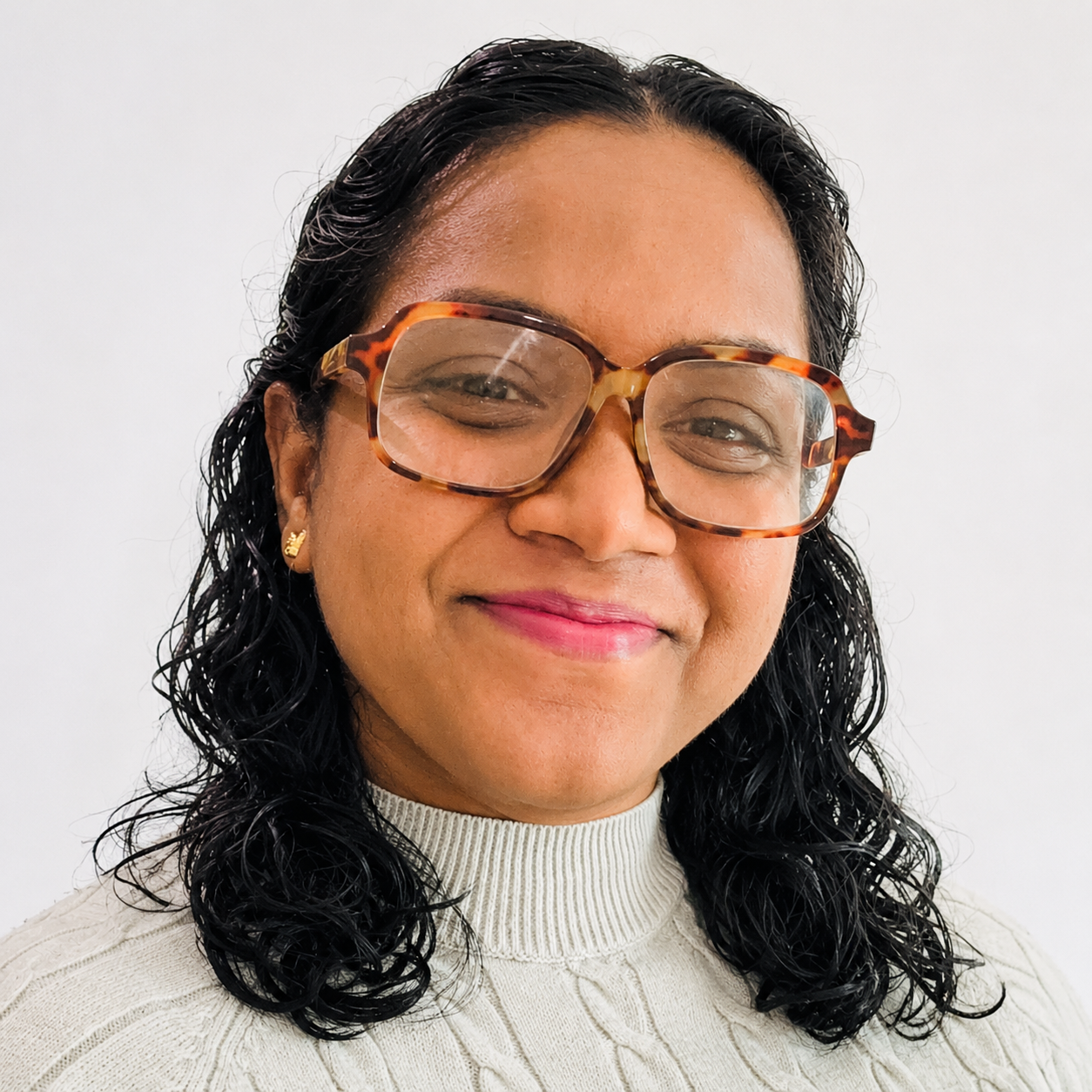
Hansani Wahalathanthrige, PhD candidate at the University of Southampton.