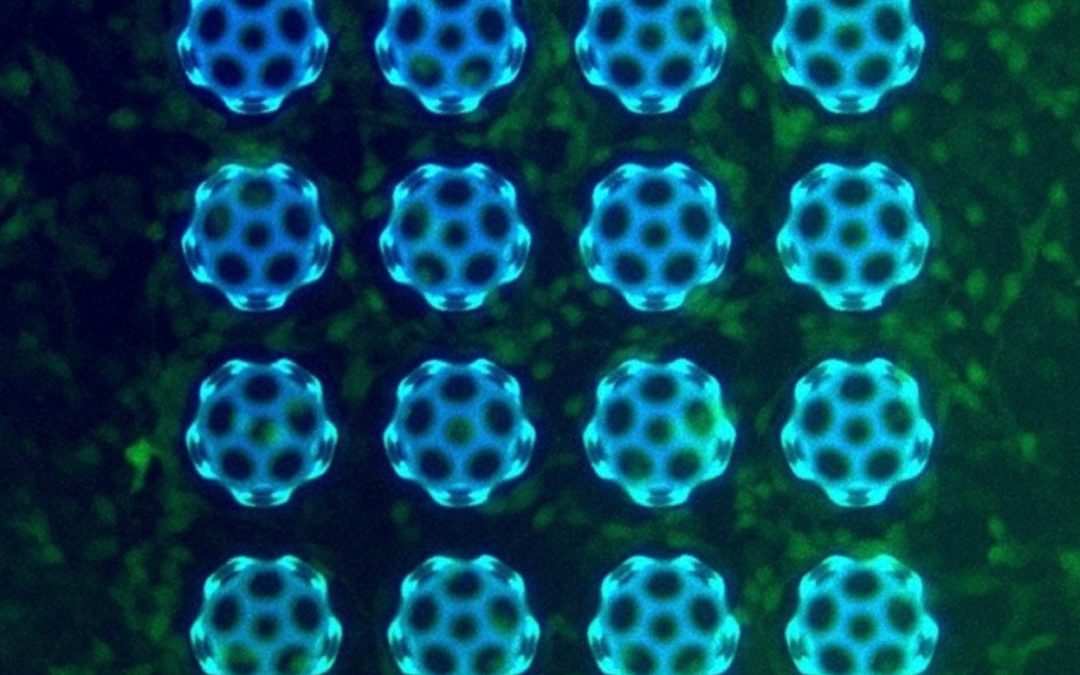
New Generation Coatings with Intrinsic Antimicrobial Action An NBIC funded Proof of Concept project led by the University of Liverpool, in partnership with Gencoa Ltd, focused on development on anti-microbial technology using magnetron sputtering technology. The...
Establishing a Biofabrication Centre In 2018, the University of Nottingham identified additive biofabrication as a priority research area and established an Interdisciplinary Research Cluster (IRC) in Additive Biofabrication, led by Professors Ricky Wildman and...
Treating Polymicrobial Biofilms Deep bone biofilm-mediated infections from trauma or surgery are difficult to treat and can be life threatening, affecting up to 100 per 100,000 people per year with up to 64% of long bone fracture patients treated for infection....
A Global Biofilm Network The annual international Eurobiofilms conference is an opportunity for scientists, clinicians and industry partners with an interest in biofilm-related problems to exchange novel information on clinical, environmental and basic elements of...
Biofilm Research Informs Marine Coatings Design Biofilms, and other marine organisms such as barnacles and algae, often accumulate on underwater surfaces and result in ‘biofouling’. This increases drag resistance, and thus causes greater fuel consumption and...