
Transforming Wound Care with Graphene Sensors
Each year, the NHS manages an estimated 2.2 million wounds at a cost of £5.3 billion. When wound microbial burden is not controlled, patients face a significant risk of sepsis, which remains the leading cause of mortality in those with severe burns. Early diagnosis of wound infection is therefore essential, yet there is no affordable, real-time bedside technology to detect biofilms at the point of care. This limits rapid, targeted treatment, drives overuse of broad-spectrum antibiotics, and raises costs as well as the risk of antimicrobial resistance (AMR).
Altered Carbon (AC), a leader in graphene-based gas sensor arrays, recognised this unmet clinical need. The company is the only commercial supplier of a viable graphene sensor array capable of detecting complex mixtures of gases and vapours. With NBIC Proof of Concept funding, and in collaboration with researchers at the University of the West of England (UWE Bristol), AC was able to extend its expertise in Volatile Organic Compound detection into wound infection diagnostics. The project generated vital data sets and demonstrated that AC’s sensor array could discriminate between biofilms of P. aeruginosa, aureus and S. pyogenes and sterile controls. This provided the foundation for developing a clinical sensor system for early infection detection.
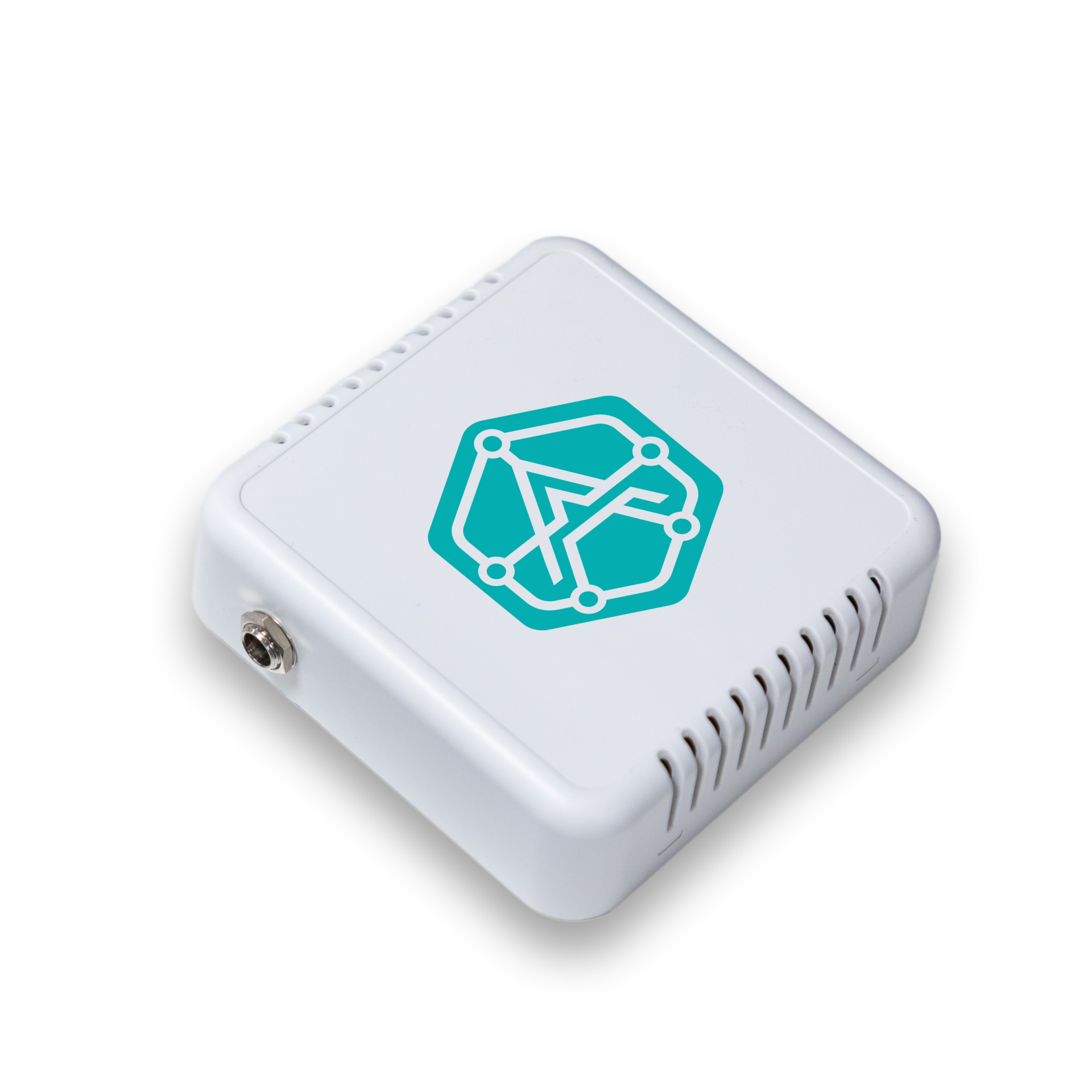
Clostridioides difficile bedside device.
The NBIC funding enabled AC Chief Technology Officer, Frazer Barnes, and Chief Product Officer, Sam Onwugbenu, to embed a full-time biofilm research scientist in the laboratories of Dr Robin Thorn and Professor Darren Reynolds at UWE Bristol. This facilitated close collaboration with Dr Amber Young at University Hospitals Bristol NHS Foundation Trust, ensuring the project benefitted from both clinical and academic expertise.
Together, the team advanced AC’s graphene sensor device platform, de-risking commercial development.
Since the project, AC has filed new IP, launched Scent Studio with automated model training and detection dashboards, and redesigned hardware for infection use cases. The company has tripled in size, raised £1.3 million equity in 2024 plus £750k in grants, and is raising a further £700k under the Enterprise Investment Scheme (EIS).
Dr Robin Thorn from UWE Bristol said:
“NBIC’s involvement not only accelerated the development of an innovative diagnostic platform, but also created the foundation for new commercial opportunities, international collaborations and significant long-term health and economic benefits”.
Dr Amber Young very sadly passed away in September 2022 after this project was completed. She was an inspiration, and her knowledge and clinical experience was critical to ensuring this project remained focussed on solving real world problems within wound care. Her research focussed on advancing patient care by achieving consistency and consensus in burn care outcomes so that research was efficient and relevant to clinical decision-making.