
The Invisible Ingredient: Biofilms and UK Food Policy
Biofilms may be invisible to the naked eye, but their impact on food production, food safety and agricultural sustainability is significant. In this blog, Ines Foidl, NBIC’s Policy Engagement Officer, explores the role of biofilms in UK food policy and how these microscopic communities of microorganisms influence the food system, from soil health on the farm to hygiene in food manufacturing.
Why Food Production Matters
Food is something most of us think about several times a day, yet we rarely consider where it comes from or what keeps it safe. In 2025, UK food production was equivalent to just 60% of the food the country consumed by value(1). Like water, food is a devolved matter (learn more on GOV.UK or from The UK Constitution Society). Each of the four UK nations sets its own farming policy, and food safety is regulated by the Food Standards Agency (FSA) in England, Wales and Northern Ireland, and by Food Standards Scotland (FSS) in Scotland.
But from the farmer’s field to the factory floor, one microscopic lifestyle quietly shapes the safety and security of our food: biofilms.
Friend or Foe?
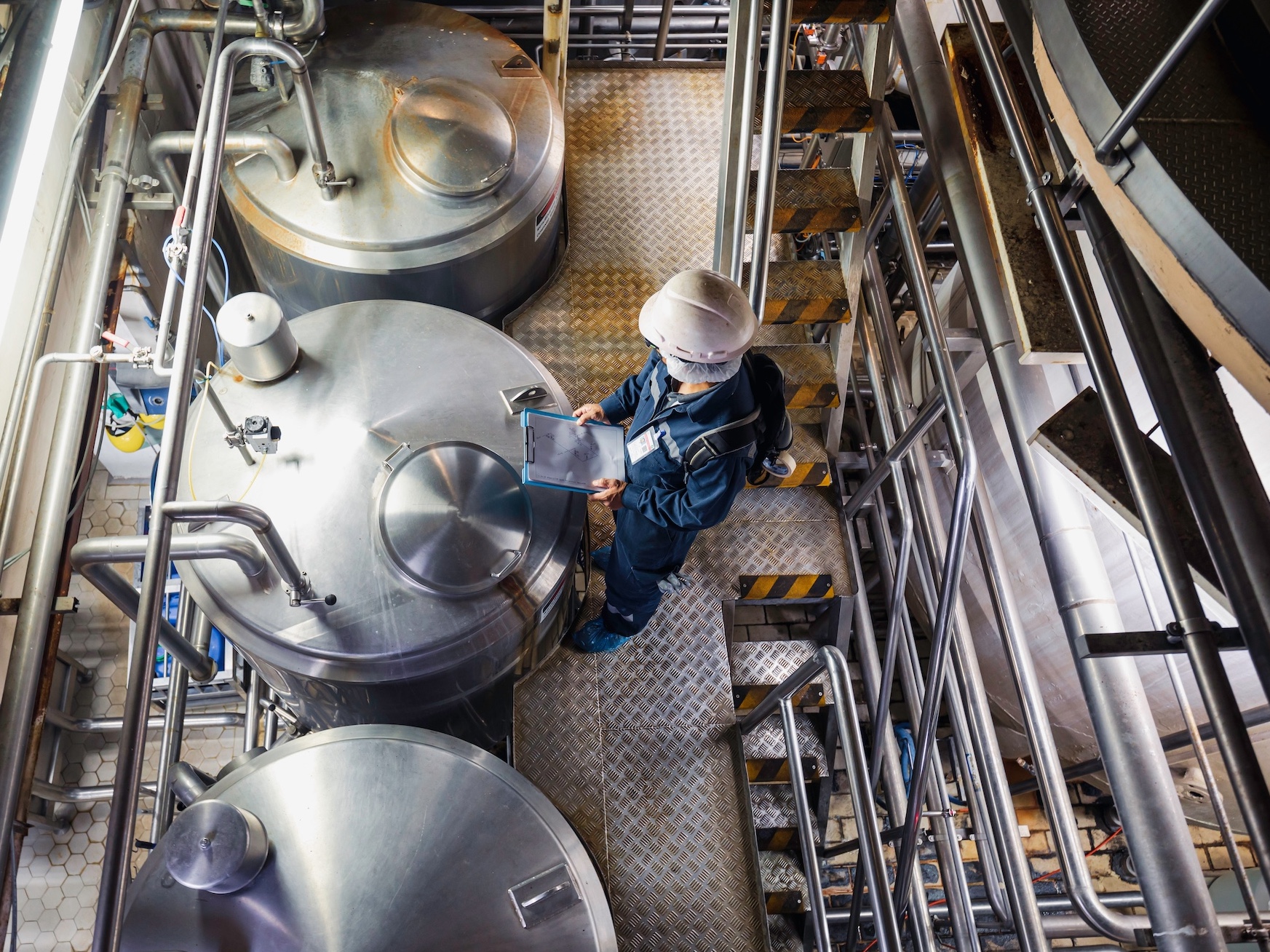
Biofilms are communities of microorganisms such as bacteria and fungi that represent the predominant lifestyle of microbial life on Earth(2). In food production, they have two very different faces. They support plant health, help treat food-industry wastewater and play a part in making fermented foods(3). Think of the rind on a cheese or a glass of kombucha. But on factory surfaces, biofilms can shelter harmful bacteria such as Listeria monocytogenes, and their protective matrix makes these microbes far harder to remove with routine cleaning(4). For policymakers, this means neither “kill all microbes” nor “encourage all microbes” will do.
On the Farm
Beneath our crops, biofilms are hard at work. Farmers can use them as biofertilisers, biostimulants and biocontrol agents to improve soil health and plant growth, and researchers have proposed that the make-up of biofilms on plant roots could even act as a sensor for soil health(5).
Since leaving the EU’s Common Agricultural Policy, each UK nation has designed its own farm support scheme. In England, farmers who spread fertiliser or manure must test their soil at least every five years under the Farming Rules for Water(6), even though the soil assessment action was dropped from the Sustainable Farming Incentive in 2026(7). Scotland’s Whole Farm Plan(8), Wales’ Sustainable Farming Scheme(9) and Northern Ireland’s Soil Nutrient Health Scheme(10) all include testing for soil nutrients and pH.
Yet where soil is tested, it is for chemistry, not biology, leaving the microbial communities that drive nutrient cycling invisible to policy. This could soon change. In March 2026, all four UK governments jointly consulted on new rules for fertilising products, explicitly seeking views from those working with microorganisms(11). Microbial biostimulants are a clear case where biofilm science could help shape the rules.
In the Factory
Foodborne pathogens cause an estimated 2.4 million illnesses in the UK each year(12). In 2025, a national outbreak of Listeria monocytogenes was traced to cook-chill meals from a London food business, where investigators found the outbreak strain and many other Listeria isolates across the production site(13). Studies suggest that biofilms are one way Listeria can become established in a factory, and bacteria living in a biofilm can need 10 to 20 times more sanitiser to kill than free-floating bacteria(14).
The rules for managing this risk now differ within the UK. Since 1 July 2026, stricter EU criteria for Listeria in ready-to-eat foods have applied in Northern Ireland, which follows EU food law under the Windsor Framework, but not in England, Scotland or Wales(15). The same factory hazard is now judged against different legal tests within the UK.
This may not last. The proposed UK-EU Sanitary and Phytosanitary (SPS) Agreement would align Great Britain with EU rules on food hygiene and on biocidal products, which include the disinfectants used against biofilms(16). In early November 2026, negotiators agreed a draft text, which EU member states are now reviewing ahead of a UK-EU summit on 20 November(17), and the UK Government expects the agreement to take effect from around mid-2027(18).
Biofilms matter for antimicrobial resistance (AMR) too. Bacteria swap resistance genes more often in biofilms than when free-floating(19), yet the UK’s AMR national action plan does not yet single out biofilms in its farm and food commitments(20).
Putting Biofilm Science into Practice
On the farm, the National Biofilms Innovation Centre (NBIC)’s work with Argentine researchers set out how biofilms could help monitor and improve soil health(5). Through its Proof of Concept (PoC) funding, NBIC has also supported the Quadram Institute and Concert Bio to build microbial communities that could make hydroponic growing safer and more productive, and Nottingham Trent University and Gencoa to test an antimicrobial coating against fungal plant pathogens in glasshouses and polytunnels(21).
In food manufacturing, NBIC funded researchers at Teesside University to work with Quorn Foods on an artificial intelligence system that spots biofilm build-up during fermentation(22). Another PoC project brought together the Chilled Food Association and the Quadram Institute to test whether operator-safe blue light could help control Listeria under factory conditions(23), while the Quadram Institute, Vitec Microgenix and Symcel used calorimetry (the calScreener) to measure how well antimicrobial treatments eliminate biofilms of foodborne pathogens such as Listeria(21).
Looking Ahead
From soil to sandwich, biofilms shape the safety and security of the food we eat. Two practical next steps stand out: adding a soil-biology indicator to farm soil testing schemes, and building biofilm-specific testing into hygiene and disinfectant guidance as Great Britain’s rules re-align with the EU.
Getting this right will require greater collaboration between governments, regulators, academics, farmers and the food industry, in all four nations. Biofilms do not respect borders, and as food and farming rules are rewritten across the UK, this invisible ingredient should not be invisible to policy.
If you would like to engage further in person with NBIC and its work in the food and agriculture sector, we wanted to signpost two events that NBIC will also be attending and exhibiting:
- CropTec 2027, 20-21 January 2027, Birmingham (free tickets until 4 January here)
- AGRI & FOOD-TECH, 16-18 March 2027, Amsterdam (early-bird rates available)
References
(1) Department for Environment Food & Rural Affairs. Agriculture in the United Kingdom 2025. Chapter 14: The food chain. [Internet]. 2026. Available at: https://www.gov.uk/government/statistics/agriculture-in-the-united-kingdom-2025/chapter-14-the-food-chain [Accessed 2026, October 8].
(2) Penesyan, A. Paulsen, IT. Kjelleberg, S. Gillings, MR. Three faces of biofilms: a microbial lifestyle, a nascent multicellular organism, and an incubator for diversity. npj Biofilms Microbiomes. 2021. 7. https://doi.org/10.1038/s41522-021-00251-2
(3) Olanbiwoninu, AA. Popoola, BM. Biofilms and their impact on the food industry. Saudi Journal of Biological Sciences. 2023. 30(2): 103523. https://doi.org/10.1016/j.sjbs.2022.103523
(4) Galié, S. García-Gutiérrez, C. Miguélez, EM. Villar, CJ. Lombó, F. Biofilms in the food industry: health aspects and control methods. Frontiers in Microbiology. 2018. 9: 898. https://doi.org/10.3389/fmicb.2018.00898
(5) Abdian, PL. Cámara, M. Cassan, FD. Castrillo, G. Díaz, M. Gonzalez Anta, G, et al. Creating pathways for collaboration between Argentina and the UK to utilise microbial biofilms in sustainable agriculture. CABI Agriculture and Bioscience. 2024. 5: 23. https://doi.org/10.1186/s43170-024-00227-0
(6) The Reduction and Prevention of Agricultural Diffuse Pollution (England) Regulations 2018 (SI 2018/151), regulation 5. Available at: https://www.legislation.gov.uk/uksi/2018/151/made [Accessed 2026, October 27].
(7) Department for Environment Food & Rural Affairs. SFI26: details, definitions and what to expect. Defra Farming blog. [Internet]. 2026. Available at: https://defrafarming.blog.gov.uk/2026/02/24/sfi26-details-definitions-and-what-to-expect/ [Accessed 2026, October 8].
(8) Farm Advisory Service. Soil sampling requirements for the Whole Farm Plan. [Internet]. 2025. Available at: https://www.fas.scot/article/soil-sampling-requirements-for-the-whole-farm-plan/ [Accessed 2026, October 8].
(9) Welsh Government. Sustainable Farming Scheme – Universal Layer: Guidance 2026. Cardiff (UK). Welsh Government. 2025. Available at: https://www.gov.wales/sites/default/files/publications/2025-12/sustainable-farming-scheme-2026-universal-layer-rules-booklet.pdf [Accessed 2026, October 8].
(10) Agri-Food and Biosciences Institute. Soil sampling continues across ‘Zone 2’. [Internet]. Available at: https://www.afbini.gov.uk/news/soil-sampling-continues-across-zone-2 [Accessed 2026, October 8].
(11) Department for Environment Food & Rural Affairs, Scottish Government, Welsh Government, Northern Ireland Executive. UK fertilisers: regulatory reform. Consultation and call for evidence. 2026. Available at: https://consult.defra.gov.uk/fertilisers-team/uk-fertilisers-regulatory-reform/ [Accessed 2026, October 8].
(12) Food Standards Agency. Foodborne Disease Policy Overview (FSA 24-03-06). [Internet]. 2024. Available at: https://www.food.gov.uk/board-papers/foodborne-disease-policy-overview [Accessed 2026, October 8].
(13) UK Health Security Agency. National outbreak of a Listeria monocytogenes CC4 t5.248 cluster associated with cook-chill meals. [Internet]. 2026. Available at: https://www.gov.uk/government/publications/listeria-monocytogenes-incident-report/national-outbreak-of-a-listeria-monocytogenes-cc4-t5248-cluster-associated-with-cook-chill-meals [Accessed 2026, October 8].
(14) Food Standards Scotland. Planktonic and biofilm forms of L. monocytogenes. Safe Smoked Fish resources. [Internet]. Available at: https://www.foodstandards.gov.scot/business-guidance/running-a-food-business/tools-and-training/safe-smoked-fish-tool/safe-smoked-fish-resources/planktonic-and-biofilm-forms-of-l-monocytogenes [Accessed 2026, October 27].
(15) Grylls, B. Misinformation circulates around new EU Listeria rules. Food Manufacture. 2026, June 26. Available at: https://www.foodmanufacture.co.uk/Article/2026/06/26/misinformation-circulates-around-new-eu-listeria-rules/ [Accessed 2026, October 8].
(16) Department for Environment Food & Rural Affairs. UK-EU SPS Agreement – Legislation in scope. [Internet]. 2026. Available at: https://www.gov.uk/government/news/uk-eu-sps-agreement-legislation-in-scope [Accessed 2026, October 8].
(17) Mishra, S. Best, D. EU states to review UK food exports deal outline. Just Food. 2026, November 3. Available at: https://www.just-food.com/news/uk-and-eu-sps-deal/ [Accessed 2026, November 10].
(18) Department for Environment Food & Rural Affairs. New guidance to help businesses prepare for EU trade agreement. Defra Farming blog. [Internet]. 2026. Available at: https://defrafarming.blog.gov.uk/2026/06/01/new-guidance-to-help-businesses-prepare-for-eu-trade-agreement/ [Accessed 2026, October 27].
(19) Michaelis, C. Grohmann, E. Horizontal gene transfer of antibiotic resistance genes in biofilms. Antibiotics. 2023. 12(2): 328. https://doi.org/10.3390/antibiotics12020328
(20) Department of Health and Social Care, Scottish Government, Welsh Government, Department for Environment Food & Rural Affairs, Department of Agriculture, Environment and Rural Affairs (NI), Department of Health (NI). Confronting antimicrobial resistance 2024 to 2029. London (UK). 2024. Available at: https://www.gov.uk/government/publications/uk-5-year-action-plan-for-antimicrobial-resistance-2024-to-2029/confronting-antimicrobial-resistance-2024-to-2029 [Accessed 2026, October 8].
(21) National Biofilms Innovation Centre. Proof of Concept 5: projects awarded September 2024. [Internet]. 2024. Available at: https://biofilms.ac.uk/download/24937 [Accessed 2026, November 10].
(22) National Biofilms Innovation Centre. AI-driven biofilm detection for sustainable fermentation. [Internet]. 2025. Available at: https://biofilms.ac.uk/ai-driven-biofilm-detection-for-sustainable-fermentation/ [Accessed 2026, October 8].
(23) National Biofilms Innovation Centre. Controlling Listeria in food production facilities. [Internet]. 2020. Available at: https://biofilms.ac.uk/controlling-listeria-in-food-production-facilities/ [Accessed 2026, October 27].
Ines Foidl, NBIC Policy Engagement Officer.
