
Biofilms in the Cystic Fibrosis Lung
Biofilms pose a significant challenge in healthcare, responsible for approximately 80% of chronic and recurrent infections [1]. For individuals with cystic fibrosis (CF), biofilms in particular present a major problem.
In the UK, over 11,000 people suffer from CF [2]; a condition which leads to the build-up of mucus in organs such as the lungs. The disease is caused by genetic mutations, which are inherited from both parents. This means that individuals with CF are born with the condition; it is not a disease that can be caught throughout a person’s lifetime [3].
So, how are genetic mutations responsible for causing cystic fibrosis?
Our genes are responsible for encoding small molecules known as proteins, which carry out essential functions necessary for our survival. When a gene is mutated, it can alter the structure and function of the protein, rendering it ineffective, or partially effective.
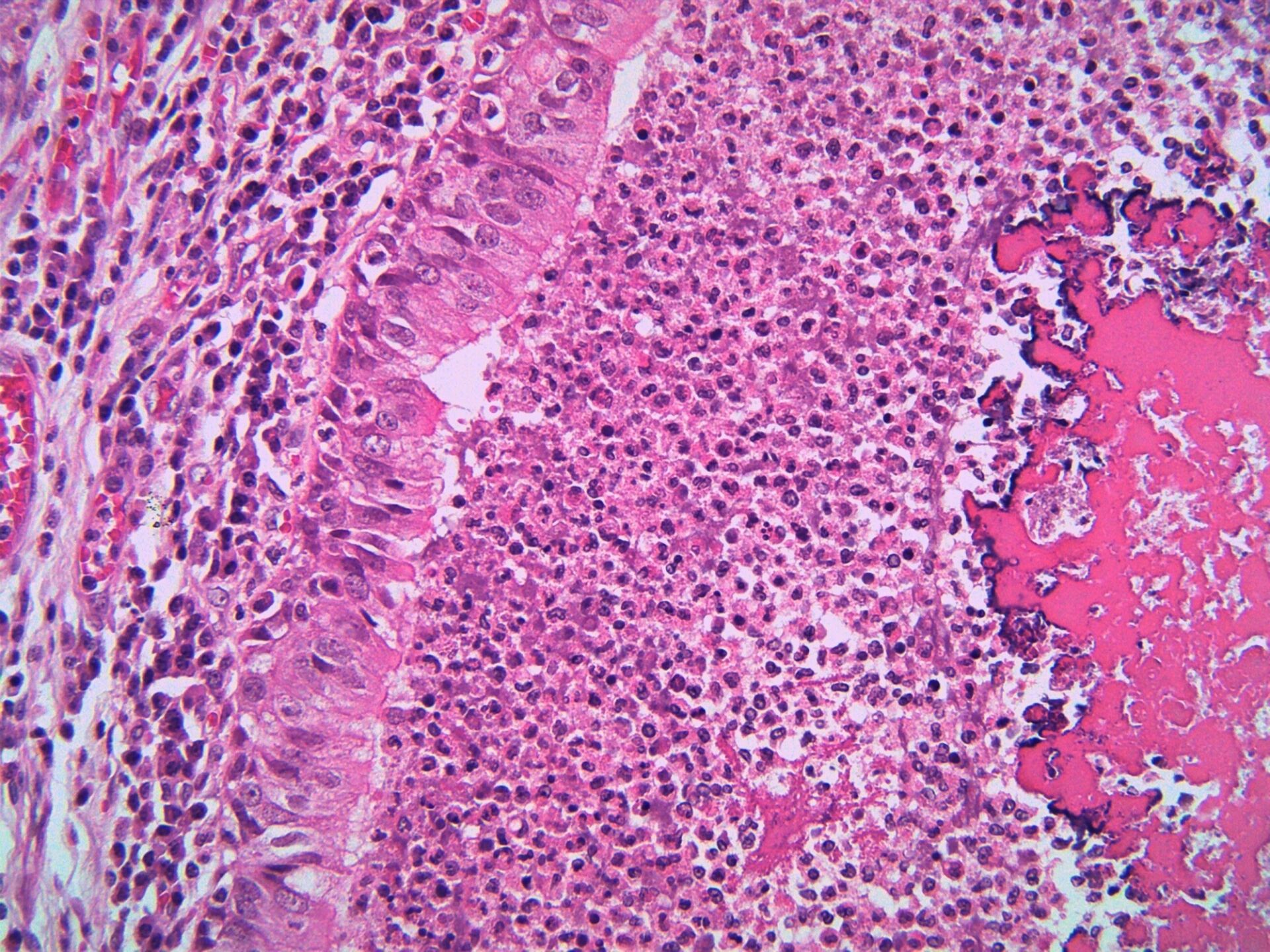
In the case of CF, the genetic mutations responsible for this disease alter a protein known as the cystic fibrosis transmembrane conductance regulator (CFTR) protein [3]. In a healthy individual, this protein is responsible for controlling the movement of salt and water in and out of the cells [3]. For people with CF, the CFTR protein does not carry out this function properly, causing sticky mucus to accumulate in various organs throughout the body.
The lungs are a particular organ that are negatively affected by the disease [4]. The build-up of mucus within the lungs can restrict and block the airway, making it difficult for individuals to breathe.
Many people with the condition also experience lung infections. This is because the mucus in the CF lung serves as an ideal environment for pathogens [5]. For example, Pseudomonas aeruginosa is a species of bacteria that can to form biofilms and cause infections in the CF lung [5,6]. These lung infections are typically chronic, persisting for long periods of time [5]. There are multiple reasons for this. Firstly, it is difficult for the body to clear the phlegm and the pathogens residing within it because the mucus is dense and sticky [7]. The biofilms that are responsible for these infections also normally possess properties that enable them to survive within the CF lung for extended periods of time [5]. The ‘glue-like’ matrix which encapsulates biofilms helps to protect the bacteria against drugs known as antibiotics [5], preventing the pathogens from being killed.
Not only do biofilms have serious consequences for the health and well-being of individuals with CF, but they also contribute significantly to the economic cost of the condition, which is estimated at $7.5 billion worldwide per year [8].
One treatment that has been developed to improve the health of individuals with CF are modulator drugs. Unlike other medications which treat the symptoms of CF, modulator drugs address the faulty CFTR protein, responsible for causing the disease [9, 10]. The therapy helps to combat the defects in the protein, enabling it to function more effectively and reduce mucus build-up.
It is also essential that we investigate biofilms and develop therapies which target these microbial communities to successfully improve CF patients health and well-being.
Last year, scientists made a significant contribution to this area of research, by creating a material that mimics human phlegm [11]. The hope is that this material can be used in the lab to resemble and study biofilm infections typically observed in the CF lung and help to test the effectiveness of novel therapeutics.
Additionally, researchers are working together to roll-out new diagnostic tools that rapidly detect the presence of pathogens from patient samples [12]. NBIC-supported spinout MiDx is a biotechnology company which has created a test that identifies the presence of pathogens like P. aeruginosa from different bodily fluids [12]. The goal is that this test will enhance the quality of life for individuals with CF, by providing fast diagnostics that support swift and effective medical interventions.
“MiDx’s test for P. aeruginosa in people with CF will empower the joint decision making of people with CF and clinicians, increasing the quality and length of life of pwCF”. Dr Shaun Robertson CEO MiDx.
To learn more about this issue check out our Research in Focus blog with Malek Hawela, an NBIC BITE PhD student at the University of Southampton who is investigating P. aeruginosa biofilms within the context of CF.
References
[1] Sharma, D. Misba, L. Khan, AU. Antibiotics versus biofilm: an emerging battleground in microbial communities. Antimicrobial Resistance & Infection Control. 2019. 8(76). https://doi.org/10.1186/s13756-019-0533-3
[2] Cystic Fibrosis Trust. Cystic Fibrosis FAQs. Available at: https://www.cysticfibrosis.org.uk/what-is-cystic-fibrosis/faqs?gad_source=1&gclid=Cj0KCQiAqL28BhCrARIsACYJvkcjKfLjALr1jSFCadpYSFQO7m4gI-PYZcB8NBvaLW6erdgSrlq8qSQaAqXREALw_wcB [Accessed 2025, January 21].
[3] Cystic Fibrosis Trust. What are the causes of cystic fibrosis? Available at: https://www.cysticfibrosis.org.uk/what-is-cystic-fibrosis/what-causes-cystic-fibrosis [Accessed 2025, January 21].
[4] Cystic Fibrosis Trust. How does cystic fibrosis affect the body? Available at: https://www.cysticfibrosis.org.uk/what-is-cystic-fibrosis/how-does-cystic-fibrosis-affect-the-body?gad_source=1&gclid=Cj0KCQiAqL28BhCrARIsACYJvkeVmyjakTZtCc_8taKEf6QKytTZ2Wz9jSsr8GRqXE3xRnZ8KGXzoOsaAnJ_EALw_wcB [Accessed 2025, January 21].
[5] Guillaume, O. Butnarasu, C. Visentin, S. Reimhult, E. Interplay between biofilm microenvironment and pathogenicity of Pseudomonas aeruginosa in cystic fibrosis lung chronic infection. Biofilm. 2022. 4. https://doi.org/10.1016/j.bioflm.2022.100089
[6] Wagner, VE. Iglewski, BH. P. aeruginosa Biofilms in CF Infection. Clinical Reviews in Allergy & Immunology. 2008. 35:124-134. https://doi.org/10.1007/s12016-008-8079-9
[7] Cystic Fibrosis Trust. Lungs and Cystic Fibrosis. Available at: https://www.cysticfibrosis.org.uk/what-is-cystic-fibrosis/how-does-cystic-fibrosis-affect-the-body/cystic-fibrosis-complications/lungs [Accessed 2025, January 27].
[8] Cámara, M. Green, W. MacPhee, CE. Rakowska, PD. Raval, R. Richardson, MC et al. Economic significance of biofilms: a multidisciplinary and cross-sectoral challenge. npj Biofilms and Microbiomes. 2022. 8. https://doi.org/10.1038/s41522-022-00306-y
[9] Cystic Fibrosis Trust. Fighting for life-saving drugs. Available at: https://www.cysticfibrosis.org.uk/the-work-we-do/campaigning-hard/life-saving-drugs [Accessed 2025, February 19].
[10] Cystic Fibrosis Foundation. CFTR Modulator Types. Available at: https://www.cff.org/managing-cf/cftr-modulator-types [Accessed 2025, February 19].
[11] Wu, Y. Romero, M. Robertson, SN. Fenn, S. Fisher, L. Willingham, I et al. Co-assembling living material as an in vitro lung epithelial infection model. Matter. 2024. 7(1): 216-236. https://doi.org/10.1016/j.matt.2023.10.029
[12] MiDx. Rapid Detection of Infection. Available at: https://mi-dx.com/ [Accessed 2025, January 28].