Beyond the Biofilm: From Beer Spoilers to Clinical Infections
As part of #BiofilmWeek, our Beyond the Biofilm blog series is spotlighting exciting and diverse research from across our network. We hear from those working in biofilm science and tackling the challenges of antimicrobial resistance (AMR). Their stories highlight not only innovation in research, but also the value of collaboration, knowledge exchange and interdisciplinary approaches in driving scientific discovery.
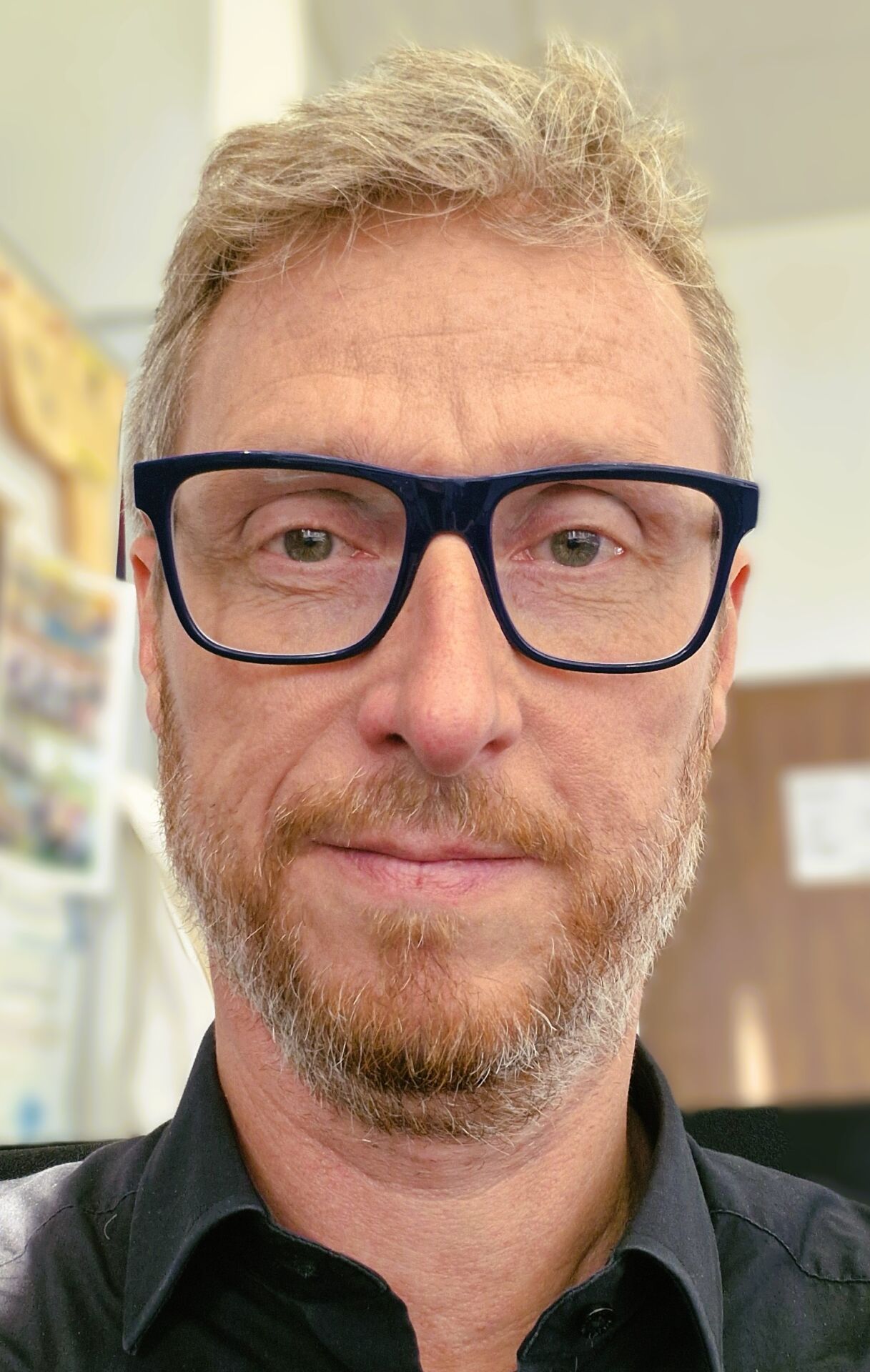
In this blog, Professor Tom Coenye, Professor of Microbiology and Head of the Laboratory of Pharmaceutical Microbiology (LPM) at Ghent University, Belgium, shares his journey into microbiology and the LPM’s research into microbial biofilms and host-microbe interactions in clinically relevant contexts.
Tom’s work spans fundamental research into the biological processes governing biofilm formation and antimicrobial tolerance, through to more translational studies exploring ways to make biofilms more susceptible to treatment, and applied collaborations with companies to evaluate novel coatings, products and anti-biofilm approaches. As Chair of the National Biofilm Innovation Centre (NBIC)’s International Scientific Advisory Board, Tom also reflects on the importance of mentorship, international collaboration and translating scientific discoveries into innovative interventions for infectious and inflammatory diseases.
My journey into microbiology and biofilm research
Looking back, I cannot point to a single moment when I decided to become a scientist. Rather, it was a gradual process driven by curiosity and a profound interest in nature. I have always been fascinated by understanding how things work and during my university studies (I have a bachelor’s degree in biology and a master’s degree in biochemistry), microbiology quickly captured my imagination. The idea that invisible organisms could profoundly influence health, disease, industry, and the environment seemed both remarkable and exciting. For my master’s thesis I worked on a taxonomical investigation of beer-spoiling bacteria (mostly lactic acid bacteria). While biofilms were not the focus of my work, in retrospect I’m confident that these beer spoilers did reside in biofilms in the brewery environment! In 1996 I started my PhD studies with Peter Vandamme, working on the identification of Burkholderia cepacia complex bacteria recovered from the lungs of people with cystic fibrosis (CF); work I later continued as a postdoc with John LiPuma at the University of Michigan in Ann Arbor (US). Also, in this case my work was not directly related to biofilms, although it seems safe to assume the bacteria I worked with did form biofilms in the lungs of these CF patients. Upon returning to Belgium, I was recruited to the LPM by Hans Nelis; back then the LPM was a small research group that has just recently started working on biofilms (mostly Candida biofilms). Over the years we have build the LPM to what it is now, a vibrant research group known worldwide for its expertise in clinically relevant microbial biofilms.
Understanding biofilms and therapy failure and translating that understanding into impact
One reason biofilms are so important is that bacteria growing in biofilms are often much more difficult to eliminate than their free-living counterparts. This increased tolerance to antimicrobial agents contributes significantly to treatment failure and is closely linked to the broader challenge of antimicrobial resistance.
Over the years, we have investigated biofilm formation in clinically relevant pathogens, explored the mechanisms underlying antimicrobial tolerance, and evaluated novel anti-biofilm and anti-virulence strategies (including approaches that target bacterial communication systems). Our initial focus was mostly on biofilms on medical devices (e.g. Candida biofilms on voice prostheses) as well as on biofilms in the respiratory tract (e.g. in CF patients), but we have also worked on biofilms in root canals, on dental plaque, on biofilms in infected wounds, and more recently, on biofilms in orthopaedic implant-related infections.
Bridging biofilm science and clinical innovation
One aspect of my work that I particularly enjoy is bridging fundamental science and practical application. While understanding microbial behaviour is fascinating from a scientific perspective, I am equally motivated by questions that have a direct impact on patients and healthcare systems. Seeing that my own PhD research (which started off as very fundamental taxonomic work) contributed to drafting of novel infection control guidelines for CF patients in several countries, was an eye-opener in this regard.
Many biofilm-associated infections remain extremely difficult to treat, particularly when medical devices such as catheters, prosthetic joints, or respiratory equipment are involved. By understanding how biofilms develop and survive, we hope to identify vulnerabilities that can be exploited therapeutically. Moreover, biofilm-related infections are often also difficult to diagnose – for example, in prosthetic joint infections a significant number of cases is culture-negative (i.e. no microorganisms are recovered despite clear signs of infection) and novel approaches (also involving novel technologies) to improve detection and diagnosis hold great promise to improve management of these infections. Finally, there is an urgent need to better quantify biofilm susceptibility and by developing novel methods to do just that, we hope we can give clinical microbiologists and clinicians the tools they need to select the antimicrobial treatment that has the best chance of working.
Not all the research at the LPM is biofilm-related. We also work on developing faster ways for sterility testing (using isothermal microcalorimetry), something that has the possibility to have a significant impact on quality control of advanced cell-based therapeutics, and we are currently working towards setting up a spin-off company to develop a live biotherapeutic product to treat chronic inflammatory lung diseases.
Over the years, it has been rewarding to see concepts that were once primarily academic become increasingly relevant for the development of new diagnostics, prevention strategies, and therapeutics. Observing something that no one has seen before is very rewarding – but the biggest satisfaction comes from seeing that your discovery has the potential to down the line change people’s lives.
It is a cliche, but no scientific career is built alone. Throughout my journey, I have benefited from the guidance, support, and encouragement of mentors, colleagues, collaborators, and trainees.
Mentorship and supporting the next generation
While I have been fortunate to learn from many outstanding scientists, good supervisors and mentors do much more than provide scientific advice. They help young researchers navigate career decisions, build confidence, recover from setbacks, and identify opportunities they might not otherwise have recognised. Most importantly, good mentors and supervisors give their mentees the possibility to become visible, e.g. they let students present their own work at conferences, they give credit where it is due, they are transparent about authorship. One of the most rewarding aspects of academic life is seeing students and early-career researchers develop into independent scientists and establish successful careers of their ow, be it in academia, industry, or the government.
NBIC and the biofilm research community
NBIC has played a pivotal role in fostering collaboration, networking, and knowledge exchange within the UK biofilm community. By bringing together researchers from diverse disciplines and at different career stages, it has created a vibrant and inclusive environment where new ideas, partnerships, and opportunities can flourish. I am proud to contribute to this mission as Chair of NBIC’s International Scientific Advisory Board. In this role, I have had the privilege of witnessing the organisation’s growth firsthand and seeing the tangible impact it has had on the field. One aspect that has impressed me most is NBIC’s commitment to supporting early-career researchers, providing them with opportunities to develop their skills, build networks, and establish successful careers in biofilm research. From this unique vantage point, I can confidently say that NBIC is unlike any other consortium I have encountered. Its ability to unite academia, industry, healthcare, and public stakeholders around a common goal has created a truly exceptional community, one that continues to shape the future of biofilm science and innovation.
Looking to the future
We are living through a particularly exciting period in microbiology. Advances in genomics, systems biology, imaging, artificial intelligence, and molecular technologies are transforming our ability to study microbial communities in unprecedented detail. And what is equally important: many of these technologies are increasingly becoming available to more and more researchers. Of course, challenges remain, but growing international collaborations and facility-sharing initiatives through organisations such as NBIC have greatly improved access to state-of-the-art infrastructure and technologies. In addition, I am especially excited by the growing convergence of disciplines, as the most important advances in combating biofilm-associated infections and antimicrobial resistance will likely emerge at the interfaces between microbiology, chemistry, engineering, data science, and clinical medicine.
Find out more
To find out more about Tom’s work, please visit the Ghent University website, which includes details of all his ongoing projects and provides direct access to his publications.
Tom Coenye, Professor of Microbiology and Head of the Laboratory of Pharmaceutical Microbiology (LPM) at Ghent University, Belgium